The eDU Hubs and Mobile Centres (EHMC) project has reached its implementation phase! Following the strategic foundation laid by our Theory of Change (ToC), we are excited to announce the finalisation of the Pilot Roll-out Plan.
This plan is the operational blueprint that translates our vision for sustainable integration into concrete actions across Romania, Slovakia, and Germany. Over the next 10 months, we will test, validate, and refine the integrated EHMC model on the ground.
What is the Pilot Roll-out Plan?
The Pilot Roll-out Plan (Deliverable D003.003) is the step-by-step guide for implementing the EHMC model. Its primary purpose is threefold:
- Operationalise the ToC: It takes the conceptual framework and defines the precise what, where, and when of our activities.
- Ensure Coherence and Adaptability: It provides a shared framework for all consortium partners (YMCA Slovakia, YMCA Europe, YMCA Romania, and YMCA Germany), ensuring the model remains consistent while allowing for local adaptation to each country’s unique challenges and existing systems.
- Generate Evidence: It establishes the rigorous monitoring, evaluation, and learning (MEL) mechanisms needed to prove the model’s effectiveness and gather insights for future scaling across Europe.
Where We Are Rolling Out the Pilot
The pilot will be implemented in three EU countries, chosen for their diverse contexts and significant Ukrainian refugee populations. In each country, we will use a combination of fixed community hubs (providing stable, integrated services) and mobile centres (extending vital outreach to rural and underserved families).
 Romania
Context: Moving from an initial transit/emergency response to long-term integration. Needs are high for language learning and addressing childcare shortages.
Focus: Prioritising language courses, job mentoring (especially for women), and providing integrated childcare solutions to unlock parental participation in training and work.
Slovakia
Context: Addressing critical gaps in service provision following the reduction of earlier refugee programmes. The need for language and psychosocial support is particularly urgent.
Focus: Expanding access to Slovak language learning, strengthening employment services (mentoring and career counselling), and establishing comprehensive psychosocial support within the hubs.
Germany
Context: Navigating a complex system while managing the largest refugee population. Challenges include bureaucratic diploma recognition and long waiting times for services.
Focus: Simplifying access to the labour market by offering digital skills training and job-matching, alongside support for school integration to help children adapt socially and academically.
Our Core Integrated Activities
The pilot activities are designed to be holistic, ensuring that no service stands alone. They directly respond to the five interconnected needs identified in our initial Needs Assessment:
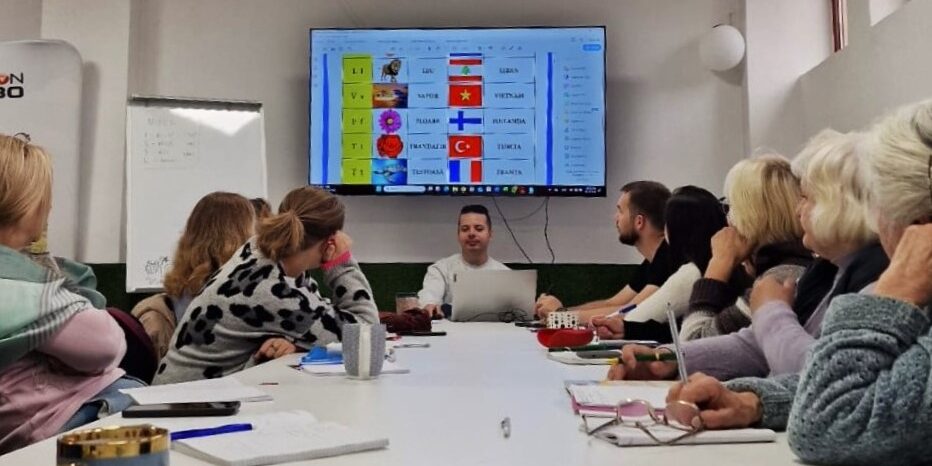
- Education and Language Support: Delivering accessible language and digital skills courses to improve daily communication and employability.
- Employment Pathways: Combining career counselling, mentoring, and job-matching to help refugees find work commensurate with their qualifications.
- Childcare and School Integration: Providing flexible childcare in hubs and offering after-school support to help children adapt, thereby freeing parents to pursue work or education.
- Mental Health & Psychosocial Support (MHPSS): Offering counselling, group activities, and safe spaces for sharing experiences and building resilience, addressing widespread emotional stress.
- Community Cohesion & Participation: Organising cultural events and shared activities to build trust and understanding between refugees and host communities, reducing isolation.
The Learning Imperative: Scalability and Transferability
The pilot phase is not just about service delivery; it is a proof of concept. Every activity is implemented with the explicit goal of generating evidence to validate the EHMC model.
By documenting our practices, collecting robust monitoring data, and using continuous peer-learning across Romania, Slovakia, and Germany, we will ensure the model is:
- Effective: We can prove the integrated approach leads to measurable outcomes (e.g., higher employment rates, better emotional wellbeing).
- Transferable: We can demonstrate how the model adapts to different national policies and local contexts.
This approach strengthens the overall European response, ensuring the lessons learned contribute directly to the EU’s wider Action Plan on Integration and Inclusion. The success of the pilot will directly inform our final Sustainability and Advocacy Plan.
The Pilot Roll-out Plan has a dual focus: delivering immediate, essential support while strategically generating evidence for long-term European impact.
Download the full Pilot Roll-out Plan for detailed timelines, milestones, and monitoring indicators:
“Co-funded by the European Union. Views and opinions expressed are however those of the author(s) only and do not necessarily reflect those of the European Union or European Social Fund Agency. Neither the European Union nor the Granting Authority can be held responsible for them.”