What Works (or not!) in Local Integration: Lessons from YMCA Programs Across Europe
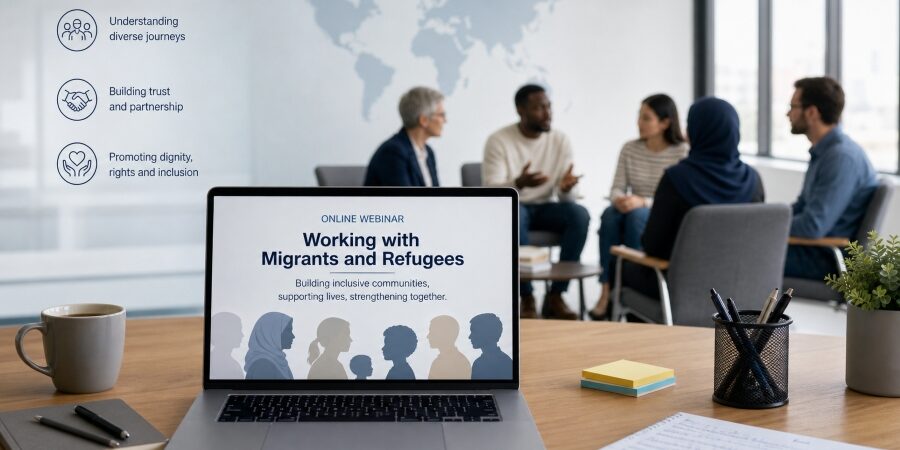
On 30 June 2026, YMCA Europe`s Working Group on Refugees convened organisations from Portugal, Greece, Italy, Romania, and Spain to compare how refugee integration works in practice.
The focus was on concrete cases, not models. The discussion shows that outcomes depend less on formal services and more on removing specific barriers people face day to day.
Across countries, small, targeted interventions changed trajectories:
- In Portugal, YMCA covered a €50 transport cost for a job interview. The participant secured employment and reached financial independence within a year. The intervention was minimal; the impact was decisive.
- In Greece, YMCA Thessaloniki enabled three children to attend summer camp by mobilising basic equipment through staff and volunteers. The result was social integration for the children and rest for a single parent with no support network.
- In Italy, YMCA Napoli used HP-supported computers in 14 youth centres to prepare unaccompanied minors for education and work before they turn 18 and leave care. One participant was finalising his CV during the session.
- In Romania, mobile and fixed integration hubs supported a Ukrainian professional to retrain and transition into a transport management role.
- In Spain, a Venezuelan graphic designer navigated diploma recognition barriers and is now part of the YMCA team, illustrating the shift from beneficiary to contributor.
- A recurring constraint was communication. In Portugal, outcomes improved when a Ukrainian staff member acted as interpreter and cultural mediator. Without this, families struggled to understand procedures and lost access to rights.
Three operational principles emerged:
- Integration is two-way. It requires access to services and openness from host communities, alongside agency from refugees.
Honesty in casework. - Staff avoid promising outcomes that depend on uncertain legal or administrative processes. This protects trust.
Barrier removal over service expansion. - Transport, equipment, documentation, and recognition systems often determine access more than programme design.
These align with YMCA Europe priorities on digital access (devices and skills), employability, and partnership delivery (e.g., HP-supported equipment in youth centres).
Programmes span at least five countries with diverse legal and service contexts.
- Italy example: 14 centres equipped with computers through a YMCA Europe–HP partnership.
- Greece example: coordinated in-kind contributions via staff and volunteer networks to meet immediate needs.
- Romania: mobile hubs extend services to rural areas with limited access.
Key challenges
- Unrealistic expectations in legal processes (e.g., family reunification) undermine trust when outcomes are delayed or unattainable.
- Staff burnout remains under-addressed; organisations are moving toward formal policies for psychological safety.
- Cultural frictions require structured dialogue; without it, differences are misread as problems.
- Labour market access depends on credential recognition, not only skills.
- Housing timelines and standards are often misaligned with reality; early orientation is necessary.
Conclusion
The session points to a clear operational takeaway: integration improves when organisations solve specific access problems and communicate limits transparently.
YMCA Europe will continue this work through a Community Forum on 10 September in Brussels, bringing together partners to translate these practices into coordinated action.
Recording of the webinar is available below.