YMCA Europe’s June 3rd webinar didn’t just hand youth workers new tools — it explained the why behind them, with “Tools for Change: Promoting Digital Wellbeing in Young People”, part of the OASIS Project, introducing methodologies for promoting mindful digital habits, shaped by psychologists, youth educators, and digital wellness experts, to give participants a real understanding of how digital overuse works.
From theory to practice
At the beginning of the seminar, the facilitators defined digital well-being and introduced the core concepts related to the psychology behind screen overuse. It is much more realistic to maintain a balanced relationship rather than completely banning devices.
The facilitators explored the factors that make it difficult to disconnect, the difference between addiction and compulsion, and the brain’s reward cycle. These concepts helped participants better understand the emotional, behavioural, and social signs of digital overload.
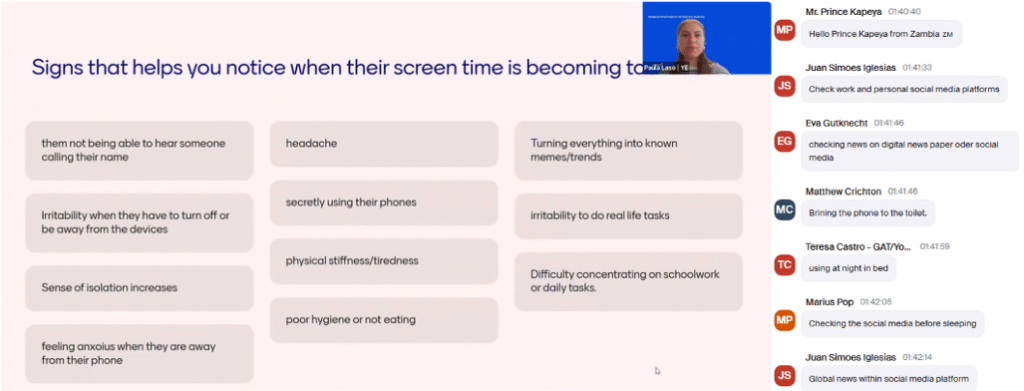 The attendees, who tuned in from different associations and YMCA branches across Europe, had the opportunity to play an active role throughout the presentation. In addition to any necessary intervention for questions and concerns, youth workers contributed via interactive activities via Zoom and Mentimeter.
This participation added to the flow of information and collaboration, putting into use the concepts explained in the session and their experience with young people.
Mindfulness deep-dive
Trainers shared their personal experience with dealing with the emotional attachment young people have to their phones. They explained their usual methods or reactions to screen overuse. Thanks to their insights, participants were able to identify changes that are both sustainable and effective in fostering understanding and communication. Young people require inclusion, not isolation.
Creating an environment where youngsters have the tools to make healthier choices was highlighted to the participants. In turn, the attendees requested more information regarding how these changes could be implemented. Their inquiries and more in-depth concerns were resolved by the specialised advice of the guest psychologist.
 The session featured the participation of Rubén Somalo, our guest expert. He specialises in contextual psychotherapy focusing on Acceptance and Commitment Therapy (ACT), Functional Analytic Psychotherapy (FAP), and Mindfulness. His experience with adults, adolescents, and children brought a practical perspective to digital habits.
He paid special attention to creating a safe space where youngsters can express their emotions freely and learn to cope with them without relying on screens. Additionally, he emphasised the importance of self-awareness, both for young people and for those supporting them. To support healthier digital habits, we must try the tools, strategies, and exercises ourselves, making trainers aware of the importance of self-assessment.
Next steps and upcoming activities
OASIS project now moves to its next stage. At YMCA Europe, the main aim is to support young people and trainers in building a balanced relationship with the online sphere. For this reason, the next step consists of a screen-free weekend retreat with youngsters that would allow participants to:
- Gain experience in digital detox
- Learn to use technology mindfully
- Live an intensive and immersive outdoor retreat
Building together a new generation prepared to face the digital world with the necessary tools, applying theory to real-life situations.
Tools for Change webinar represented an important step in this process, providing participants with practical tools, expert guidance, and a space for reflection and exchange.
 By combining knowledge, experience, and practice through the OASIS project, we continue to support young people in navigating the online sphere with greater awareness, confidence, and well-being.