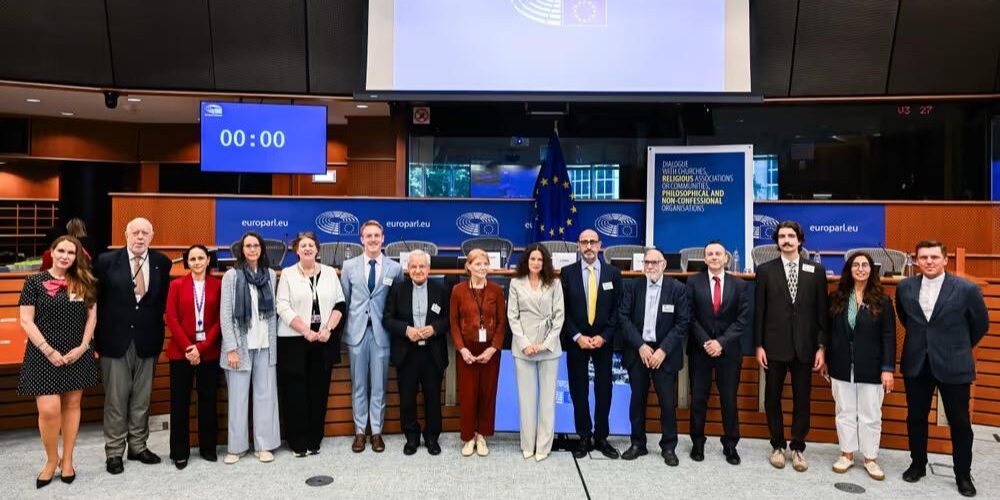
On the 9th of June 2026, YMCA Europe’s Advocacy Lead, Dragoș Tarța, delivered a powerful intervention on the evolving relationship that young people have with Artificial Intelligence, digital technologies and virtual spaces, during the “Health and well-being in the age of artificial intelligence: communities tackling isolation and digital risks” seminar.
Held at the European Parliament and hosted by Vice-President of the European Parliament Antonella Sberna, the event reunited high-level officials, civil society actors, representatives of philosophical and faith-based organisations, as well as other key stakeholders, to debate on the emerging challenges of the digital age faced by young people.
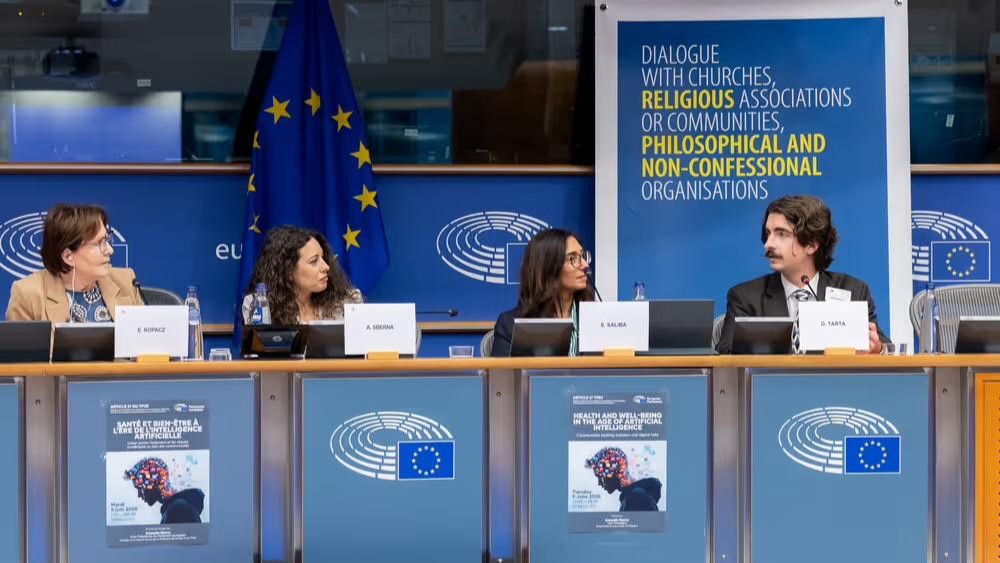
Organised under the Article 17 TFEU dialogue framework, the seminar reflected the growing urgency with which EU institutions are approaching the intersection of technology and human well-being.
At its core, the dialogue raised a question that is becoming impossible to ignore in European policy: as artificial intelligence accelerates and reshapes nearly every dimension of daily life, are we investing enough in the human infrastructure, the communities, relationships, and spaces that allow young people to navigate this transformation with resilience, dignity, and agency?
Dragos Tarta delivered YMCA Europe’s intervention, grounding the organisation’s perspective in both its 180-year history and its present-day work on the ground across Europe. Watch below the intervention.
The contribution centred on two core arguments: that young people today are not fundamentally different from any previous generation: they are human beings seeking belonging, purpose, and the space to grow, and that the digital age is not experienced equally, with nearly 1 in 3 young Europeans still lacking basic digital skills, a gap that directly correlates with social isolation and diminished civic participation.
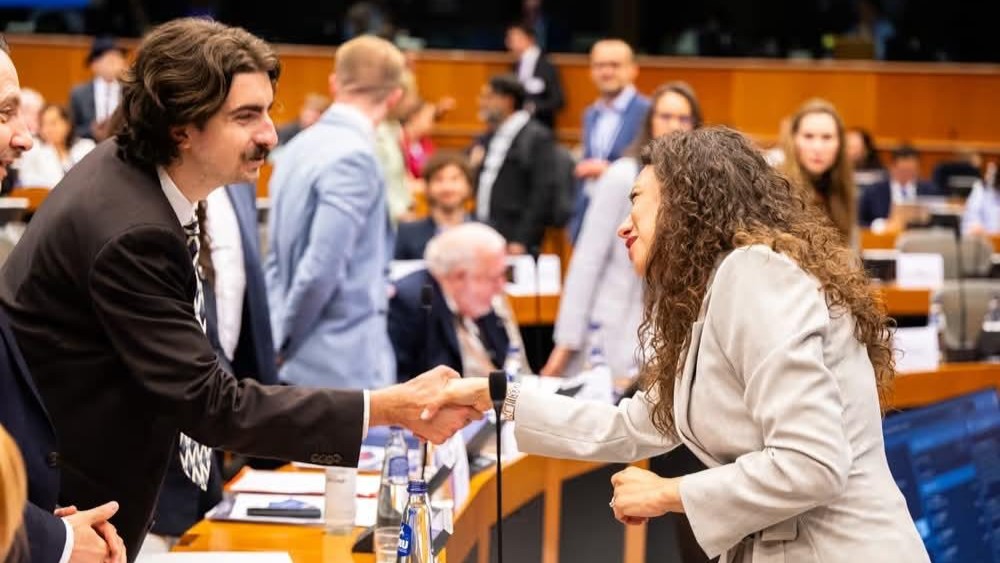
YMCA Europe highlighted its network of digital hubs across the continent as a concrete example of community-based responses to digital exclusion, and called on European institutions to ensure that investment in the digital transition includes sustained, dedicated funding for community-based youth work.