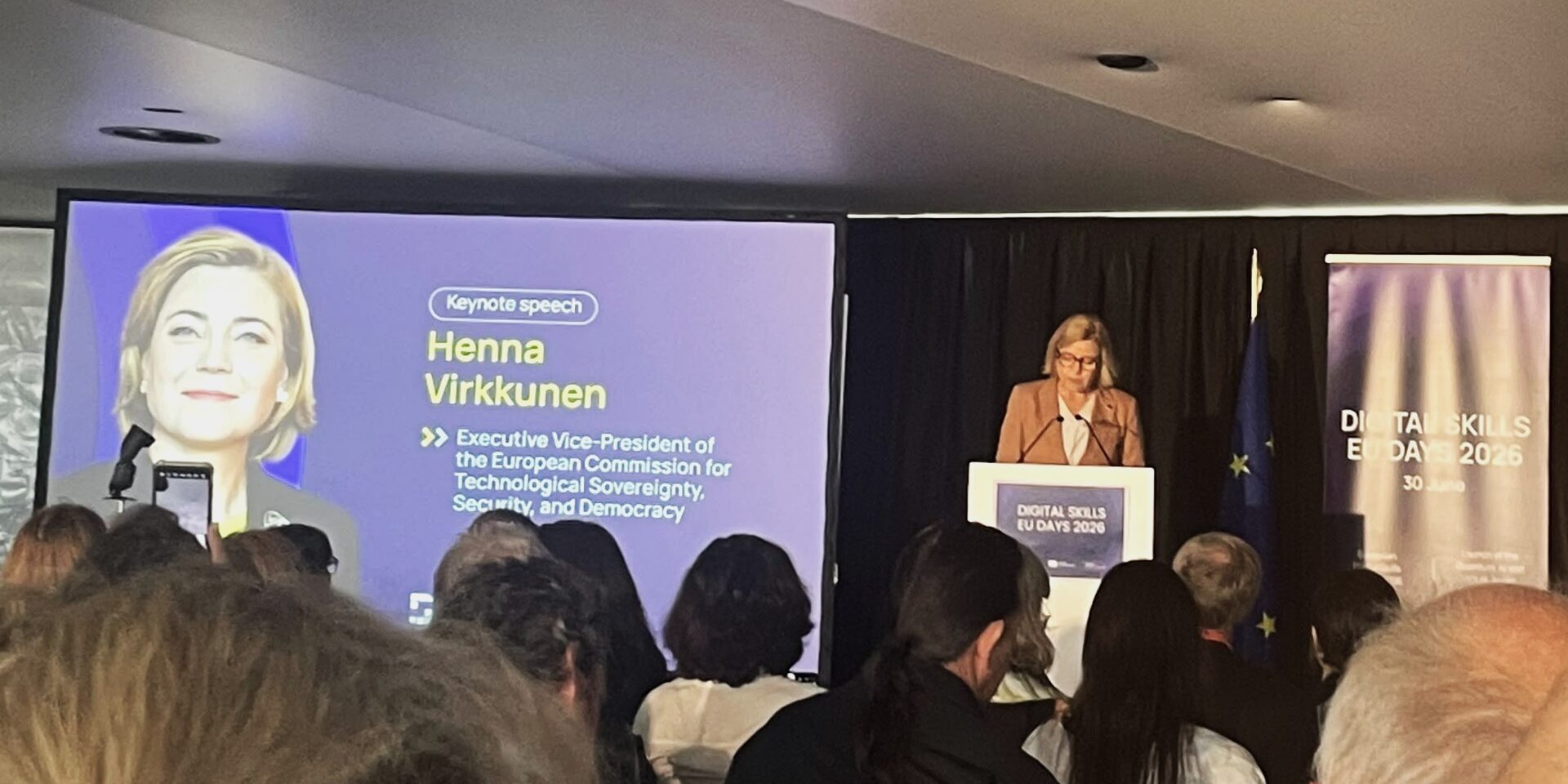
On June 30, 2026, the Digital Skills EU Days brought together leaders from industry, education, and civil society to celebrate frontline digital inclusion pioneers and chart the next frontier of European technological sovereignty.
With rapid innovation making aligned skills critical for securing this sovereignty, the event served as the formal launchpad for three ground-breaking digital skills academies—spanning Artificial Intelligence (AI), Quantum technology, and Virtual Worlds. To aggressively drive this momentum, the European Commission utilised the summit to celebrate field-tested innovations and unlock over €400 million in funding from the Digital Europe Programme for advanced training initiatives.
Empowering the Ecosystem Europe’s Digital Highway
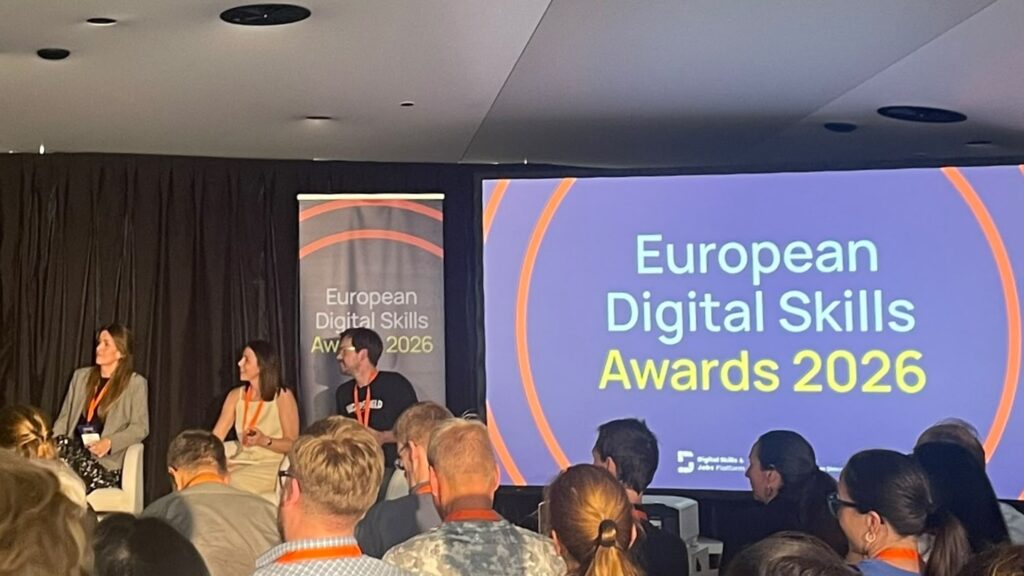
Introduced by project manager Evelina Evalova, the five-year-old Digital Skills and Jobs Platform (DSJP) serves as the central hub and “home” for Europe’s digital stakeholders.
Run by European SchoolNet, the platform bridges the gap between basic literacy and expert professional development by centralising national initiatives, training support, funding data, and collaborative spaces. By uniting multi-stakeholder partners and corporate “pledgers” who commit to concrete training targets, the DSJP drives localised impact at scale and serves as the foundational infrastructure that hosts critical pillars such as the Cybersecurity Skills Academy.
Celebrating Excellence: The 2026 European Digital Skills Awards
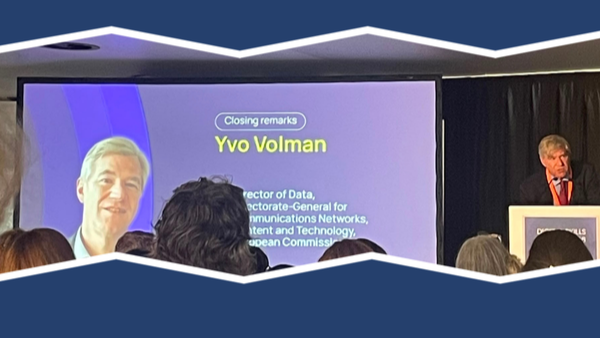
The European Digital Skills Awards 2026 recognised frontline innovations that break down barriers and turn passive tech consumers into confident, active creators.
Evaluating over 200 applications based on real-world inclusion and user-centred design, the jury prioritised practical impact over unnecessary technical complexity to ensure long-term sustainability. Following inspiring addresses from Henna Virkkunen and Roxanna Minzuto, the category winners took the stage to highlight how their programs champion future-readiness and personal growth:
- Digital Skills for Education: Generation AI (University of East Anglia) teaches children how algorithms work, preserving independent critical thinking regarding democracy and science.
- Digital Upskilling at Work: Consortium FAIRmat (Humboldt-Universität zu Berlin) uses workshops and hackathons on its Nomad platform to build vital data literacy for scientists.
- Women in ICT Careers: THRIVE (Kiron Open Higher Education GmbH) bridges the gender gap by pairing practical technical training with direct mentorship and industry capstones to secure long-term employability.
- Inclusion in the Digital World: Scratch Tactile (Sistema THEAD sccl) provides flexible learning architectures that empower local educators to bring coding to marginalised student groups.
- Cybersecurity Skills: HackShield (Future Cyber Heroes) uses gamified storytelling to transform children into active digital citizens who keep their communities safe online.
Frontiers of Deep-Tech: Launching Three New European Academies
To aggressively drive Europe toward its Digital Decade targets, the European Commission formally unveiled three forward-looking deep-tech academies designed to remain agile and highly responsive to emerging trends:
- The Quantum Skills Academy
- The AI Skills Academy
- The Virtual World Skills Academy
This entire deep-tech ecosystem is structurally reinforced by the High Performance Computing (HPC) Academy, which is actively standardising a fragmented landscape of 120+ providers into a single framework that converts over 600 skills into clear, certified learning pathways.
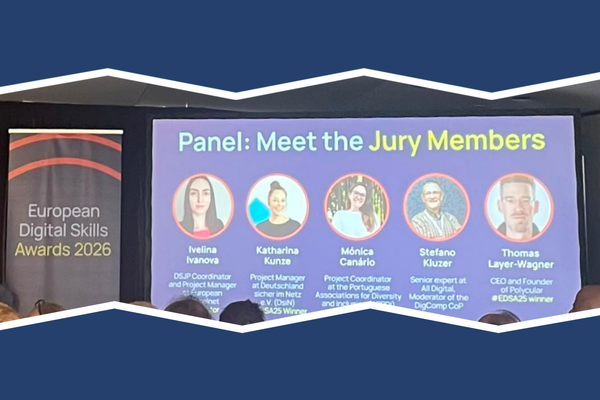
The introduction of these Academies was followed by an inspiring panel of experts who mapped out the future of learning. The consensus pointed to a blended educational continuum. An equitable framework that seamlessly pairs foundational university degrees with agile, workplace upskilling and lifelong learning.
Commission representative Renate Nikolay solidified this collective commitment by announcing a new coordinating project to unite these academies permanently under a single micro-credentials framework. Moving into the final networking reception, attendees left with new contacts, cross-border project opportunities for countries such as Portugal, and an overwhelming sense of trust as they look ahead to the upcoming Digital Talent EU Days in Dublin on October 15–16.
Ultimately, the event made it clear that true technological sovereignty cannot be purchased with hardware alone; it must be cultivated through a dedicated local community and accessible education. This core message directly mirrors the mission of YMCA Europe’s Digital Hubs initiative.
Just as the Digital Skills EU Days emphasised moving away from empty technical complexity to focus on practical, life-changing human experiences, YMCA Europe and HP are actively turning local spaces into vibrant technology centres. Youth use distributed hardware to transition from passive consumers to active creators. Furthermore, inclusive, lifelong upskilling across generations matches perfectly with the YMCA’s mission.
Training young people in foundational coding while simultaneously upskilling local adult staff and community members on critical administrative systems, ensuring no one is left behind in the advancing digital age.