YMCA Bringing youth rights, democratic participation and the realities of youth organisations into Council of Europe decision-making.
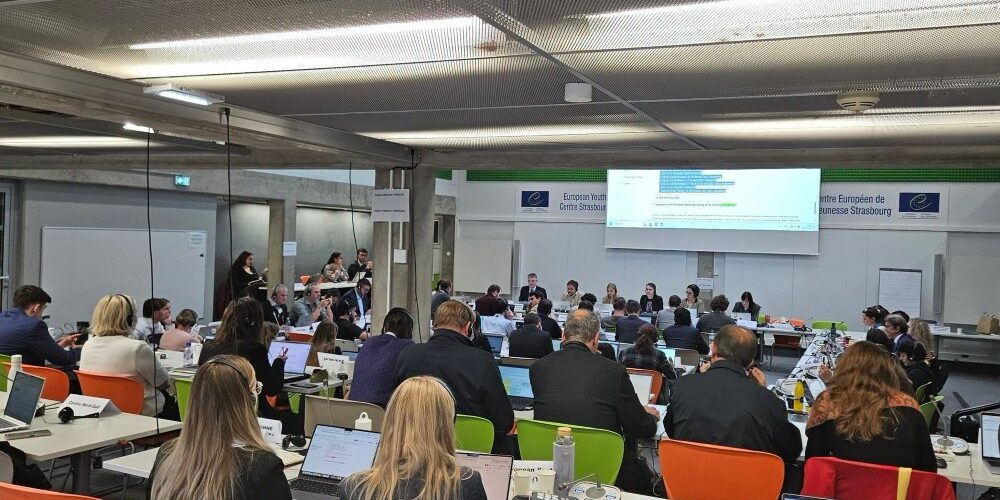
From 19 to 21 October 2026, representatives of governments and youth organisations met at the European Youth Centre in Strasbourg for the 55th meeting of the Joint Council on Youth.
YMCA was represented by Dragoș Tarța, YMCA Europe’s Advocacy Lead and a member of the Advisory Council on Youth.
Where youth organisations share decision-making
The Joint Council on Youth is the Council of Europe’s main co-decision-making body for youth policy. It brings together the European Steering Committee for Youth, representing governments, and the Advisory Council on Youth, representing youth organisations.
Through this co-management system, youth organisations participate directly in establishing priorities, objectives and budgets for the Council of Europe’s youth sector. Young people are therefore not only consulted on decisions after they have been developed. Their representatives help shape those decisions from the beginning.
From democratic participation to artificial intelligence
The meeting addressed several issues with direct consequences for young people and the organisations working with them:
- Young people’s democratic participation, including evidence from countries that have lowered the voting age and the possible development of a new Council of Europe instrument in the youth field.
- Youth perspectives on artificial intelligence, with the next steps endorsed for a feasibility study on a possible recommendation concerning AI and young people.
- Access to rights and social inclusion, including support for young refugees and migrants, peace education, social rights and the participation of Roma and rural youth.
- European Youth Foundation funding, with the 2027 ad hoc calls set to prioritise young people from Ukraine and young people’s right to participate.
Members also discussed how to integrate a youth perspective across the Council of Europe’s work, follow-up to the fourth European Youth Work Convention and preparations for the next Council of Europe Conference of Ministers responsible for Youth, scheduled for 2028.
Connecting European policy with local realities
YMCA’s contribution focused on connecting these European policy discussions with the conditions experienced by young people and youth organisations in their communities.
Can youth organisations access the resources they need? Can young people exercise their rights regardless of their background or where they live? Are they involved early enough to influence the decisions that affect them?
This perspective is supported by YMCA Europe’s first Youth Wellbeing Report, based on youth-led community research across nine national contexts. The report found that, although formal channels for youth participation exist in many communities, they often remain consultative and rarely give young people genuine influence over decisions. It also identified unequal access to employment, housing, social services and youth-friendly spaces as interconnected barriers to young people’s wellbeing and participation. These findings provide a practical evidence base for YMCA’s advocacy for accessible resources, rights-based policies and meaningful youth participation.
As the Advisory Council’s lead on access to rights and social rights, Dragoș brought this perspective to the discussions. YMCA emphasised the need for accessible funding, practical action against barriers to rights and meaningful partnership with young people throughout the policy-making process.
Why this matters
Funding, rights and participation cannot be addressed separately. Young people need protected rights and accessible opportunities, while youth organisations need adequate resources to create the spaces, programmes and support through which participation becomes possible.
Participation in the Joint Council is part of YMCA Europe’s wider advocacy work, which connects evidence from young people and national and local YMCAs with European policy-making. Through its engagement with the Council of Europe, the European Parliament, the European Youth Forum and other institutions, YMCA advocates for stronger youth rights, meaningful participation, wellbeing, digital equity and intergenerational fairness. This work helps ensure that decisions made at European level reflect the realities of young people and communities across the continent.