Every YMCA strives to serve its community with impact, transparency, and long‑term sustainability. To support this mission, the YMCA Organisational Health Assessment provides a clear, practical way for each organisation to understand how it is performing across key areas of organisational life.
The Health Assessment is a self‑assessment tool used across the entire YMCA Movement – local, national, regional, and global. By using one shared framework, YMCAs can speak a common language about organisational development and collaborate more effectively.
 Why the Health Assessment Exists
A unified tool was created by the Global Movement Strengthening Team to help YMCAs:
Understand Their Current Organisational Health
It offers a structured overview of strengths and areas for growth in governance, finance, strategy, policies, communication, and more.
Support Long‑Term Sustainability
By identifying gaps early (e.g., missing policies, unclear succession planning, unstable funding), YMCAs can prevent risks and plan proactively.
Inform Organisational Development Planning
The assessment feeds directly into improvement plans, strategy updates, leadership discussions, and resource mobilisation.
Importantly: This tool is not used for ranking, grading, or sanctions. It is solely for internal improvement and advisory purposes.
How the Health Assessment Works
Each YMCA fills out one final, agreed version of the assessment. It can be completed:
- Individually and then consolidated by the team
- In a group meeting with leadership, staff, and volunteers
The recommended team includes:
- CEO/General Secretary
- Board Chair and Board members
- Key staff
- Volunteers across relevant functions
Once completed, the form is shared with the Area Alliance.
What the Assessment Measures
The tool is organised into nine key categories, each representing an essential area of organisational health:
1. Financial Stability
Budgeting, reporting, audit practices, income diversification, risk mitigation, reserves, and sustainability.
2. Governance
Board structure, election processes, leadership clarity, board performance, CEO evaluation, succession planning, and liability coverage.
3. Constitution, By‑laws & Policies
Whether core documents are up‑to‑date and whether key organisational policies exist and are applied (e.g., safeguarding, HR, risk management, etc.).
4. Monitoring & Evaluation
Program quality monitoring, needs assessments, knowledge management, impact measurement tools, and beneficiary reach.
5. Strategic Planning & Mission
Strategic plan quality, participation, innovation, alignment with Vision 2030, and clarity of mission/values.
6. Diversity & Youth Participation
Inclusion practices, representation rules, and systems to ensure equal participation of young people, staff, and volunteers.
7. Communications & Branding
Annual reports, website quality, communication strategy, dedicated communication capacity, and brand protection.
8. Property Management
Ownership, registration, risks, and development plans for physical assets.
9. Staff & Volunteer Development
Human resources adequacy, training systems, employment policies, job descriptions, and workforce composition.
Understanding the Scoring System
Each category has a maximum number of points (from 4 to 20). Scores are calculated automatically based on responses; there is no manual scoring.
Scores are meant to be indicative, not definitive. For example:
- A low financial stability score doesn’t necessarily mean a crisis – context matters.
- Strength in one category may balance lower results in another.
The goal is to help YMCAs focus attention where it is needed most.
How YMCAs can Use the Results
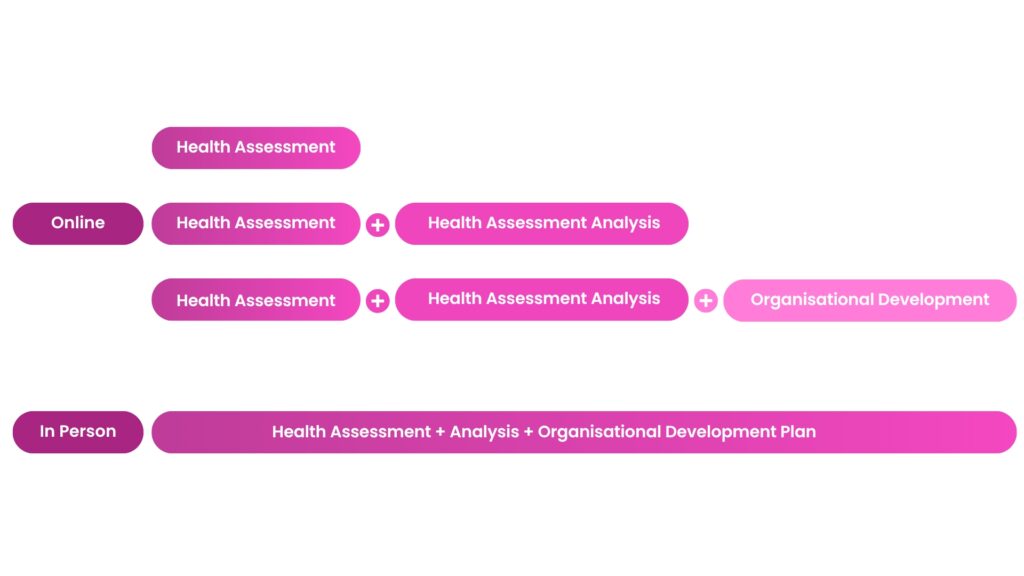 After completing the assessment, organisations typically use results to:
- Engage in a guided Organisational Development Process
YMCA Europe can assist with a guided process on further Organisational Development Process.
- Identify Priorities for the Next 12–24 Months
Each category includes space to reflect on improvement needs.
- Develop or Update Strategic and Operational Plans
- Strengthen Governance and Leadership Practices
- Improve Transparency and Accountability
- Prepare for Funding Opportunities
Stronger policies and systems make YMCAs more competitive in grant funding.
- Engage Staff and Volunteers
The assessment encourages discussion, shared understanding, and cross‑departmental collaboration.
Data Protection and Confidentiality
All information shared is confidential and used exclusively for internal movement strengthening. YMCAs may additionally authorize sharing their data with trusted partners or funders specifically to support coordination and humanitarian action.
Why This Tool Matters for the Future
A healthy organisation can:
- Serve more young people
- Deliver more effective programs
- Respond to crises with resilience
- Build trust with communities and partners
- Contribute meaningfully to the global YMCA Vision 2030
- Live into the future sustainably and confidently
The Health Assessment is more than a checklist – it is a catalyst for organisational development, learning, and long‑term impact.
Watch the Info-Session HERE
To read about the Global Movement Strengthening Team and to Download the Templates HERE