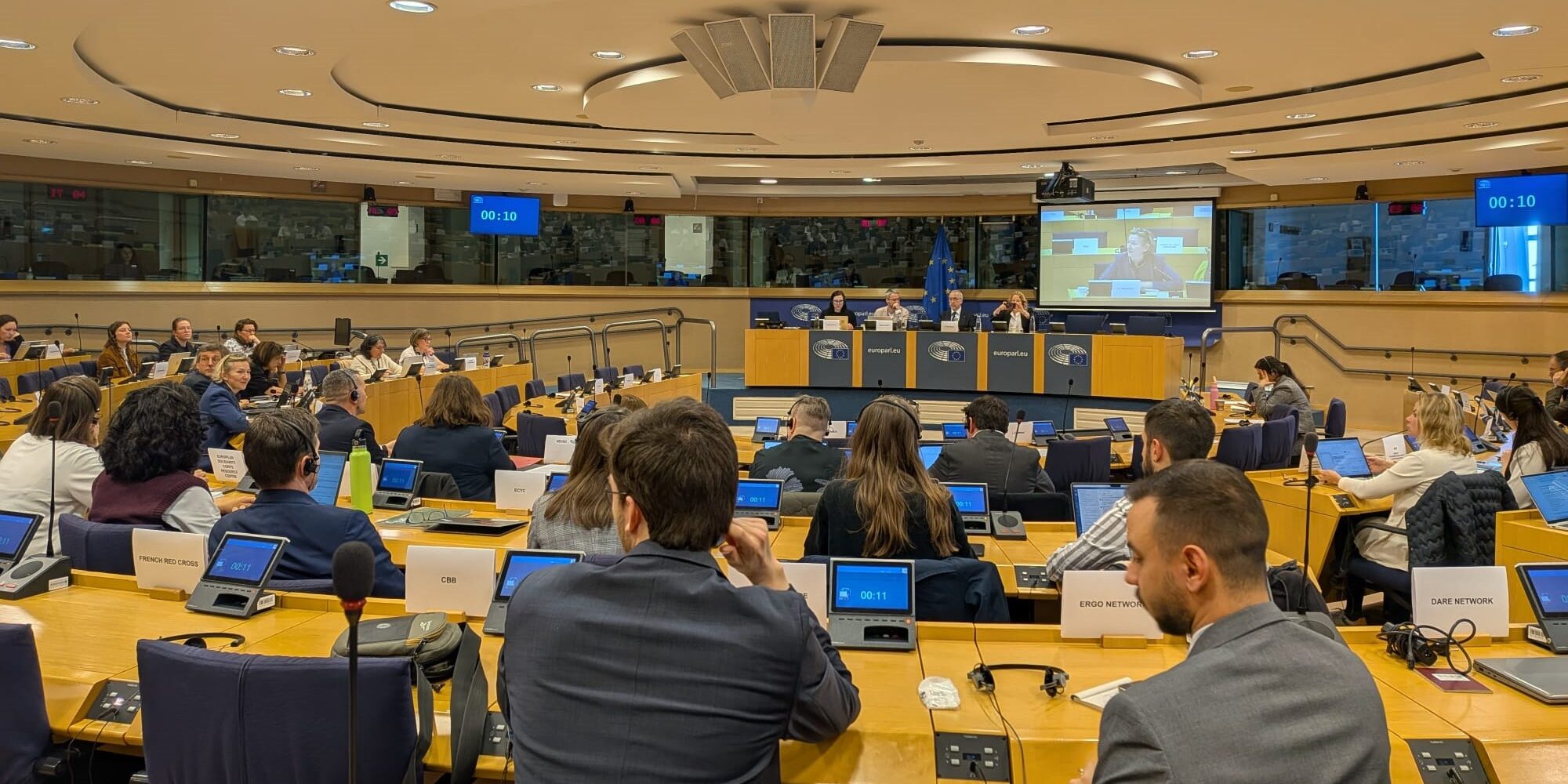
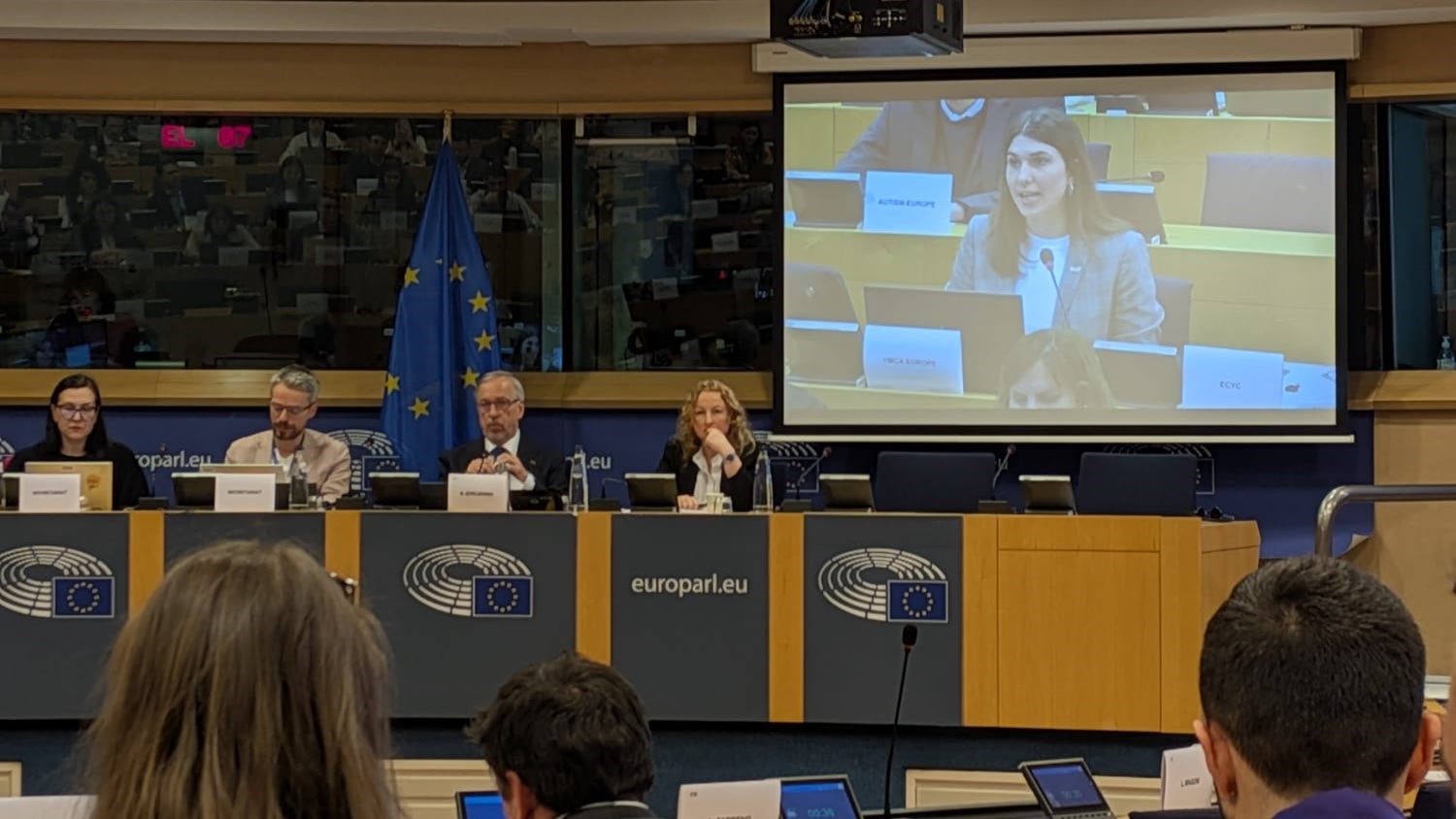
February 25th, YMCA Europe participated in the stakeholder dialogue of the Committee on Culture and Education (CULT) at the European Parliament, contributing to the discussion on the future of the Erasmus+ 2028–2034 programme, with a particular focus on volunteering.
Jessica Woitalla represented our network, bringing forward the experience of YMCAs across Europe in delivering non-formal education, youth work and volunteering opportunities at scale.
Volunteering as a Pathway into Civic Life
We welcomed the positive developments in the Erasmus+ budget, recognising the programme as a flagship EU instrument for mobility, cultural exchange and youth engagement. Across the YMCA movement, we have seen how both Erasmus+ and the European Solidarity Corps provide first-time beneficiaries with meaningful entry points into civil society.
For many young people, volunteering through these programmes becomes a first step into leadership and long-term community engagement. Sustained and well-funded volunteering schemes directly contribute to building active and inclusive communities across Europe.
Three Conditions for Impact
While welcoming the overall direction of the programme, YMCA underlined three structural priorities for the next programming period:
1. Ring-fenced funding for youth and volunteering
Dedicated budget lines are essential. Without earmarked resources, youth and volunteering actions risk being diluted within a broader integrated framework. Protecting a meaningful share of funding for youth-led and youth-focused actions is necessary to preserve the transformative power of volunteering.
2. Practical support systems – especially affordable accommodation
Mobility and volunteering depend on real-world conditions. Housing challenges across Europe increasingly affect young participants. YMCA Europe’s network provides youth-friendly accommodation in many regions, and experience shows that secure and affordable housing enables volunteers to focus on learning, engagement and personal development.
We encouraged Parliament to explicitly recognise accommodation as part of the support infrastructure for Erasmus+, particularly for participants from fewer-opportunity backgrounds.
3. A strong ecosystem for youth work
Beyond funding, the programme must continue to support the formation of youth workers and practitioners. A clearly structured youth strand within Erasmus+ is critical to ensuring that opportunities reach young people across Europe and that pathways into civic life remain open.
Looking Ahead
Volunteering changes lives – but only when the enabling conditions are in place. From local YMCAs to European-level engagement, we see daily how mobility and solidarity programmes strengthen communities and cultivate the next generation of active citizens.
YMCA Europe will continue advocating for a youth-centred, well-funded and inclusive Erasmus+ programme that safeguards volunteering as a cornerstone of European civil society.
Download the full statement submitted to the CULT Committee (PDF).