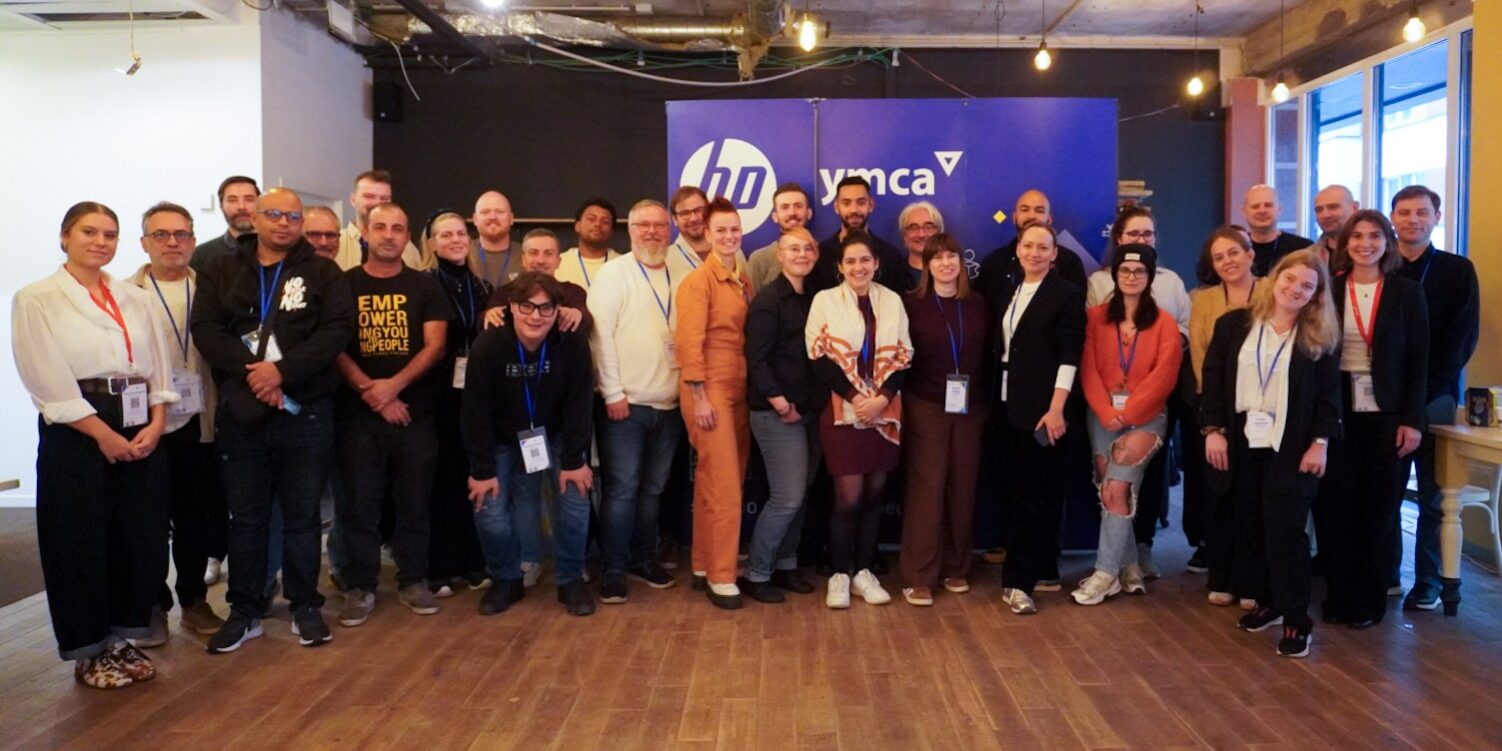
Thirty-five YMCA leaders from 19 countries and 24 local associations came together in Brussels from 21 to 23 October for From Digital Hubs to Future Skills: The Next Chapter, a three-day workshop focused on what comes next for the YMCA’s digital skills work across Europe.
Part of the wider YMCA-HP partnership framework, the workshop was designed around the people leading this work locally and nationally. Rather than presenting one model to replicate, it created space for participants to compare experience, challenge assumptions, learn from partners and identify what they can take back into their own organisations.
The starting point was simple: a European network becomes more valuable when knowledge moves through it.

Learning from what already works
Participants arrived with very different realities. Some manage established Digital Hubs and regular digital-skills programmes. Others are developing new approaches, exploring partnerships or looking at how technology can become more relevant within existing youth work.
The first sessions focused on that collective experience.
Participants shared programme models, methods and lessons from their own countries, looking at what attracts young people, what keeps programmes relevant and what is needed to move from occasional activities to consistent learning opportunities.
Gaming was also explored as a youth work tool, not simply as entertainment, but as one possible entry point for engagement, learning and digital skills.
These exchanges allowed participants to look beyond their own organisations and see how different YMCAs are responding to similar challenges.

Understanding partnerships from both sides
A central part of the workshop focused on how European and global partnerships can translate into meaningful local cooperation.
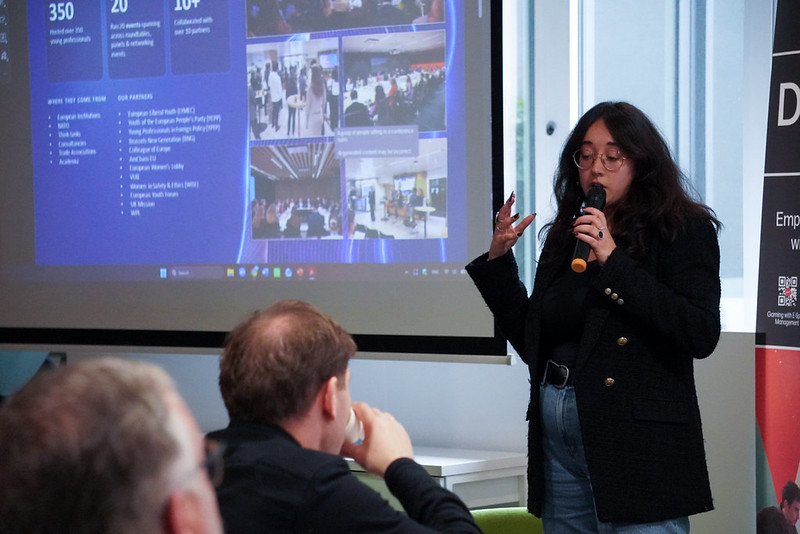
Representatives from HP and Uber joined YMCA leaders for a practical discussion about what companies look for in community partnerships, the internal constraints they work within, and what makes local cooperation credible and sustainable.
Participants explored questions that are often left unspoken: What does a company need from a local partner? Where do expectations become misaligned? How can an existing European relationship open doors locally? And what makes cooperation valuable enough for both sides to continue investing in it?
The session was designed to help participants understand not only how to approach potential partners, but how to build relationships that work for both the company and the community organisation.
Participants then reflected on their own situations, identifying what they could strengthen locally and where support or coordination from YMCA Europe could help them move forward.

From employee volunteering to AI
The partnership conversation continued into a wider discussion on the future of employee volunteering in digital programmes.
The focus was on moving beyond one-off corporate volunteering activities and considering how employees with relevant expertise can contribute meaningfully to skills programmes, mentoring and local learning experiences.

The workshop also looked at how artificial intelligence is changing both the skills young people need and the way organisations themselves operate.
Contributions from Microsoft and HP Robots added technology and industry perspectives to the discussion, helping participants consider how emerging tools can be introduced responsibly and practically within YMCA programmes.
For local YMCA leaders, the question was not simply which new technologies are available. It was how those technologies can support their mission, strengthen existing programmes and create relevant opportunities for young people.
Building regular programmes, not isolated activities
Throughout the three days, one theme remained consistent: digital inclusion requires more than access to equipment.
YMCA Digital Hubs work when technology is combined with relevant content, capable local teams, partnerships and programmes that respond to the realities of each community.
Participants therefore looked at how to strengthen regular programme offers around digital skills, AI, employability, gaming and other areas connected to the future of work.
The emphasis was on adaptation rather than replication. A Digital Hub in one country may operate very differently from a hub elsewhere, but both can benefit from shared resources, common partnerships and the experience of the wider network.

What happens after Brussels matters most
The workshop ended with 35 leaders returning to 19 countries with new contacts, practical ideas and a clearer understanding of what they can develop next.
Their role now is to translate those conversations into action: adapting ideas to local needs, strengthening partnerships, testing new programme formats, connecting with companies and building more consistent opportunities for young people.
They also return as champions for digital inclusion within their own organisations, able to share what they learned with colleagues and multiply the value of the workshop beyond the people who were physically in the room.

For YMCA Europe and HP, this is an important part of how the partnership develops. Growth is not measured only by the number of Digital Hubs or devices deployed. It also depends on the capacity of local leaders to turn resources, technology and partnerships into relevant programmes.
The workshop may have ended in Brussels, but its real impact will be determined by what these 35 participants now build across 19 countries.
Full photo album is available here: https://flic.kr/s/aHBqjD8FkP