YMCA Europe is proud to announce the publication of its first Youth Wellbeing Report, a landmark piece of research that offers an unprecedented picture of the realities faced by young people across the continent today.
Developed through research conducted by National Movements and the European Youth Representative Network, the report is the product of a year-long community research process conducted across nine national contexts: France, Greece, Kosovo, Malta, the Netherlands, Romania, Spain, Sweden and Ukraine.
A Research Milestone for the Movement
This report marks a significant step forward for YMCA Europe’s advocacy work. For the first time, the organisation has systematised community-level insights gathered directly by young people, in their own communities, into a coherent evidence base spanning employment, housing, participation, mental health, social services and youth-friendly spaces.
The report is built from the bottom up: National Movements and EYRN members applied YMCA Europe’s own Needs Assessment Framework (a structured yet flexible research tool covering community profiling, problem analysis, stakeholder mapping, service gap analysis, policy review and youth-specific assessment) to their own local contexts between September 2025 and May 2026.
The result is a report that speaks with authority: Its findings are grounded in questionnaires, focus groups, semi-structured interviews and direct observation carried out by young people who understand their communities intimately.
We consider this combination of rigorous methodology and lived experience to be central to the report’s credibility and its relevance to policymakers, funders and the broader youth sector.
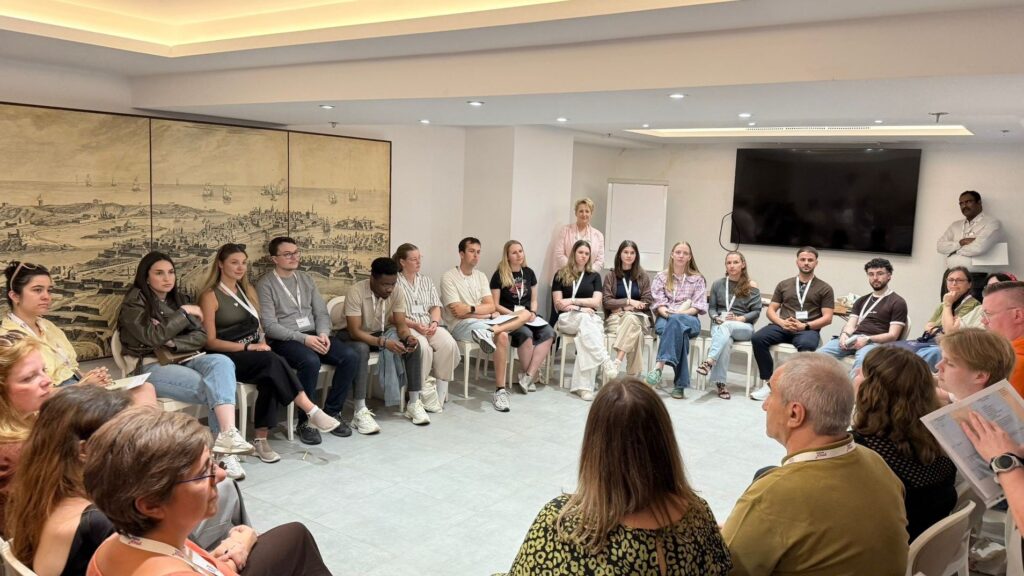
A Genuinely Participatory Process
The Youth Wellbeing Report is a testament to the strength of youth-led advocacy: young leaders, working alongside YMCA Europe’s National Movements, identified the most pressing issues affecting their peers, mapped existing assets and gaps, and shaped the structure of the report from the ground up.
This participatory design was a clear methodological choice. Our work for youth stems from the sincere conviction that any policy we advocate for must be grounded in young people’s realities, drawing on their lived experiences.
By ensuring that the report’s analysis and recommendations emerge directly from community-level research, we guarantee that the solutions advanced at European and national level are legitimate and responsive in the eyes of the young people they are meant to serve.
What the Report Reveals
Despite considerable national and local diversity, the Youth Wellbeing Report identifies a set of cross-cutting challenges shaping the lives of young people across Europe. Youth unemployment and underemployment remain structurally high even where general labour indicators appear favourable, and many young people, despite strong educational engagement, face a persistent mismatch between the skills they acquire and the demands of local labour markets.
Housing affordability and availability compound this insecurity, delaying young people’s transition to independent living and reinforcing dependence on family support in nearly every context studied.
The report also documents a troubling paradox in youth participation: formal channels for youth voice exist in almost every context assessed, yet they remain underused, largely advisory, and rarely translate into genuine influence over decision-making, with territorial and social inequalities determining who can even access these limited opportunities.
Mental health emerges as both a symptom and a driver of these pressures, intertwined with economic insecurity, housing stress, social isolation and, in Ukraine, the direct and continuing impact of war, while youth-centred psychosocial support remains fragmented and invisible to those who need it most.
Across all nine contexts, the lack of youth-friendly third spaces and the uneven design of social services intensify these gaps, with particularly dire consequences for rural youth, migrants, refugees, NEETs and other groups facing compounded vulnerability.
Read together, these findings point to a systemic issue at European level: material imbalances in access to employment, housing, youth agency, sustained social services and digital opportunity that collectively constrain young people’s ability to participate meaningfully in the life of their communities.
The report estimates that roughly a third of Europe’s population experiences deprivation of key services and rights, a disconnect from decision-making and constrained prospects for a stable transition into adulthood.
The Foundation for Future Advocacy and Programming
We intend for this report to sit at the base of YMCA Europe’s future policy proposals and programmatic interventions. It provides, for the first time, an evidence-based picture of what young people in different European contexts actually need and prioritise.
The report’s core conclusion is unambiguous: addressing youth wellbeing in Europe requires coordinated action across public policy, resource allocation and genuine youth consultation, rather than isolated, sector-specific interventions.
This is exactly the kind of integrated, cross-sectoral advocacy that YMCA Europe, as an organisation uniting 36 National Movements and more than 3,600 local branches across the continent, is uniquely positioned to pursue.
YMCA Europe extends its sincere gratitude to the members of the European Youth Representative Network, the National Movements, and the countless young people and community stakeholders across France, Greece, Kosovo, Malta, the Netherlands, Romania, Spain, Sweden and Ukraine whose participation made this report possible.
Their contribution represents not only research, but an act of advocacy in itself: the assertion that young people’s own accounts of their lives must be at the centre of the policies designed to serve them.